
The Rise and Fall of Tent City
Last time was last June at Tent City in Christina Park. Here, for five months, the City of Wilmington, at the direction of Mayor John Carney, performed a remarkable experiment. Last January, they officially sanctioned the growing collection of tents that had accumulated on the park’s big field. This meant that, instead of shutting it down, they contracted with Friendship House, a local homeless services provider, to manage Tent City and provide those staying there with services. Furthermore, the Carney Administration committed to hauling away the omnipresent trash at the encampment twice a week, and to set up and maintain a bank of port-a-potties. The plan was to run Tent City while they developed a more permanent “tiny homes” village into which the residents could then transition.
The Carney Administration soon learned that maintaining a sanctioned camp was hard. Friendship House’s on-site supervision was minimal. This left a small group of OG residents to self-govern, taking it upon themselves to look out for those in the camp who were more vulnerable due to gender, mental illness, age, and frailty. But street smarts alone couldn’t contain predatory incidents, regular fights, occasional fires, and ubiquitous substance use. They had no training to handle frequent flareups of psychosis and trauma response. No one organized food provision, leaving the residents to rely on an assortment of groups who would come in with food, meals and donations on a haphazard schedule that often amounted to feasts on the weekends and famine during the week.
As spring came and Tent City grew, the Carney Administration tried its hand at social engineering. City officials had a problem with the visual aesthetics of how the residents grouped their tents. The clusters they formed facilitated mutual support and sharing of resources. Instead, the Carney Administration decreed that Tent City be rearranged into a more orderly, impersonal grid of uniform, city-issued tents. A faction of residents refused to comply, and this quickly devolved into a fiasco.
As this standoff persisted, the newly erected tents that were meant for the residents instead were used to shelter a steady stream of newcomers. As the camp’s census explained, Tent City’s management challenges magnified. The influx only promised to grow as summer approached. Meanwhile, the Carney Administration was getting nowhere in finding a suitable site for the proposed tiny homes village. As Tent City approached its fifth month of being a sanctioned camp, the Carney Administration pulled the plug. After sinking well over a half-million dollars into the encampment, it announced that it was shutting it down in 30 days.
In the midst of the controversy surrounding this decision, the Carney Administration followed a well-established playbook in shutting down Tent City. Along with the 30-day notice, case workers came in to work with placing residents in other housing arrangements—temporary and permanent, and arrangements were made for interim storage of resident belongings. As the June 15 camp closure date approached, city officials pointed to a growing list of Tent City residents they said had moved on to housing or treatment arrangements. On the 15th, advocates watched from the outside of a perimeter fence as the Carney Administration moved Tent City residents out. And on June 16, the Tent City site reverted to a fallow, neglected park.
Under the Bridge
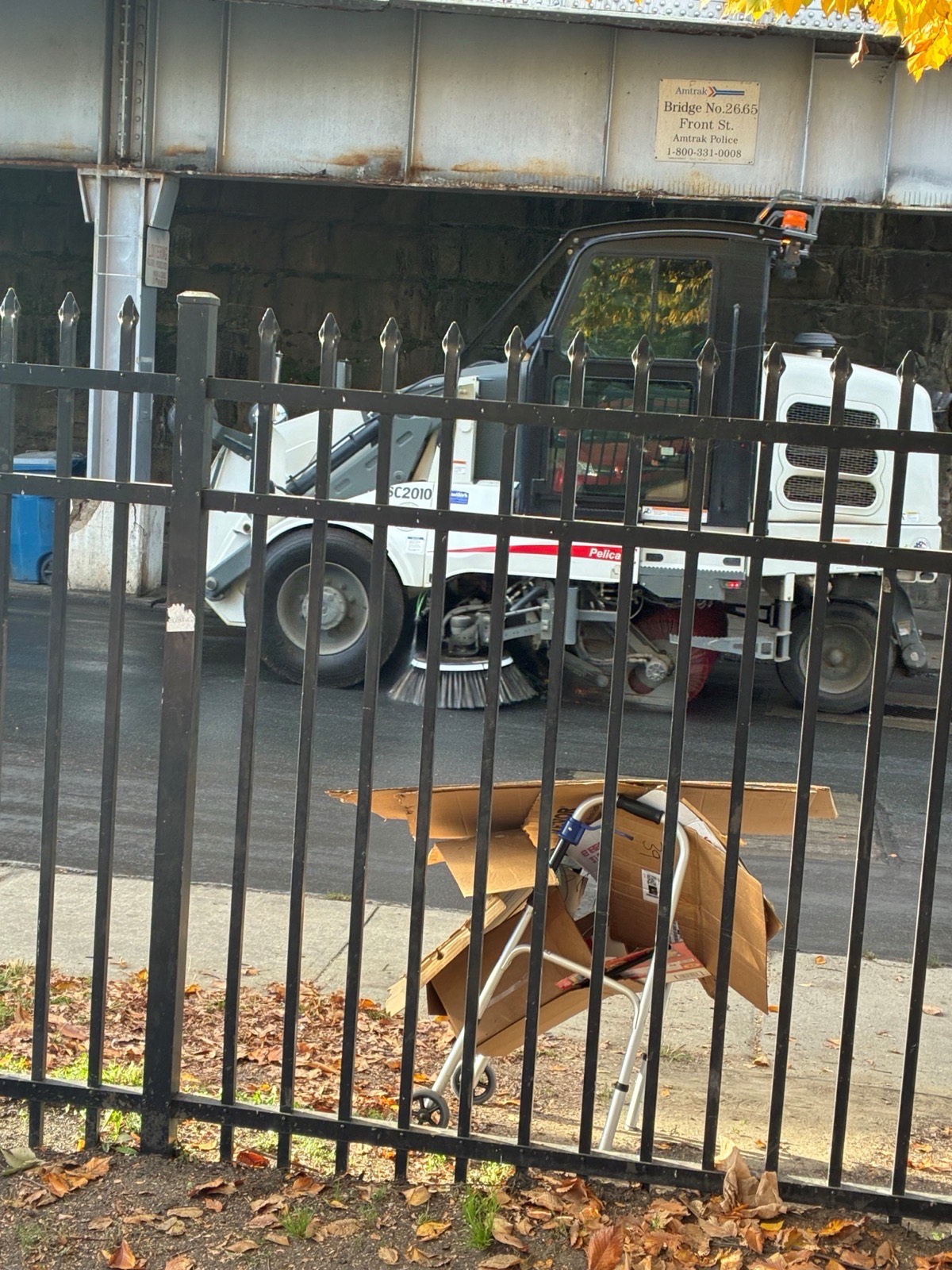
In the wake of Tent City, what was striking was how little had changed. No new housing, shelter, or services became available. The mayor’s office continued to refer to their list of people who were stably housed and claiming success for their efforts. But the slow, steady return of erstwhile Tent City residents to Wilmington’s streets told a different story. With Christina Park off-limits, a number of them regrouped under the railway overpass on East Front Street, a five-minute walk from Christina Park. This place, referred to simply as “Under the Bridge,” provided some protection from the elements for ten to fifteen who came to sleep there regularly. Joining them during the day were people who overnighted at the nearby Sunday Breakfast Mission, Wilmington’s only emergency shelter. This latter group, who had nowhere to go after being put out of the shelter at 6 a.m., would then wait to be let into the mission again that evening.
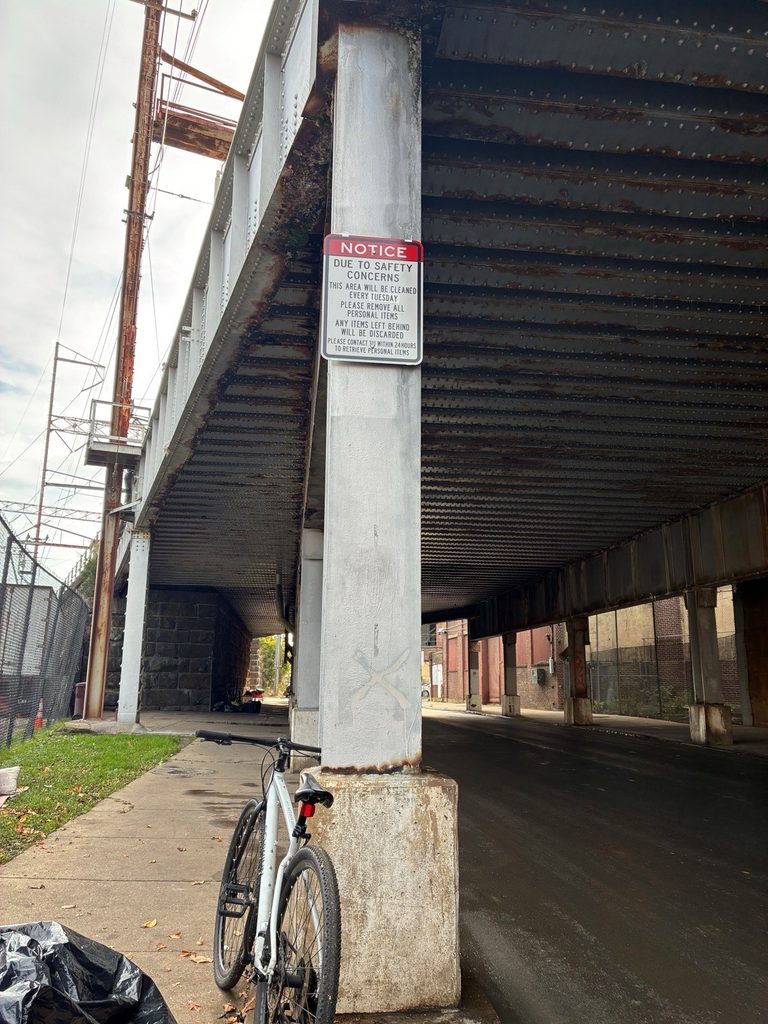
What did not change was how the Carney Administration, despite its Tent City missteps, nonetheless sanctioned Under the Bridge, but more informally this time. This meant the police tolerated people’s overnight presence as long as they did not pitch any tents and they took their belongings with them each morning. It also meant the Carney Administration sent over an environmental cleaning detail every Tuesday morning to scrub the street and sidewalks, and to pick up the trash.
What also did not change was the precarity of life Under the Bridge. Those staying there quickly learned where not to sleep when it rained. Access to restroom facilities required a walk to Wilmington’s train station, and dealing with the Amtrak police. Groups again came irregularly with food and donations, and the resulting trash again became ubiquitous. Residents again were left to fend for themselves, and the same OGs who were left to police Tent City now looked to provide a modicum of order and safety Under the Bridge.
What is the Plan?
The Carney Administration tolerated this situation until it abruptly withdrew their sanction. On Friday afternoon police informed the residents that the camp would be swept on Monday. True to their word, on Monday morning at 7:00 the Carney Administration’s de facto homeless services: police, sanitation trucks, and environmental cleanup crew, were ready for a sweep. They proceeded to remove all people, possessions, and trash. Video footage taken by residents showed police throwing a wheelchair into a trash truck, supporting their contention that minimal effort was made to differentiate their possessions from trash. By 9:00 a.m. Wilmington’s homeless services had left the scene, with the underpass clean and empty in their wake.
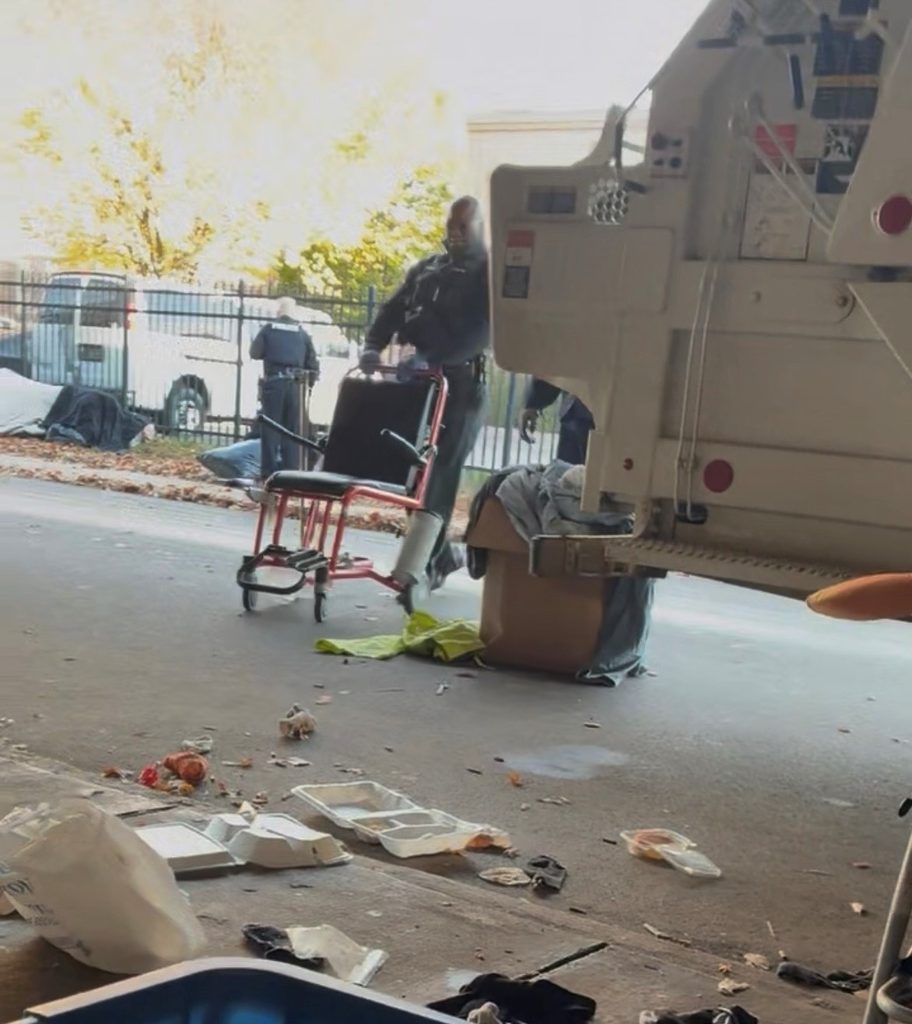
The official line, repeated from the mayor’s office to the street cops, was that their hand was forced by the condition of the camp. It was the residents, they asserted, who had let the trash and detritus pile up to the point where it blocked the sidewalk, and to where the human waste constituted a health hazard. In effect, this said that the homeless people were literally shitting their beds. Seen another way, it held them responsible for lack of proximate sanitation facilities and for failing to clean up the charitable refuse left behind by those with good intentions.
Even If the justification for the sweep were to be on the residents, resident actions do not justify the manner in which the Carney Administration carried it out. It did not justify the haste with which it was conducted, the absence of social services for displaced residents, or the failure to provide any mechanism for preserving residents’ belongings.
More important than how this sweep was carried out, however, was what the sweep reveals about the Carney Administration’s broader approach to homelessness. The sweep is a quick fix that fills the void left by current mayoral administration’s lack of any deliberate homeless policy. Any policy, that is, beyond assigning responsibility for providing homeless services (other than the previously mentioned troika) onto the State and lamenting how Wilmington would not have a notable homeless problem were it not for all the people migrating from Philadelphia. Since Tent City’s demise, no new homeless services have appeared, and the tiny homes initiative is all but dead. If they have a path forward, then they are keeping it to themselves.
In the absence of a policy, the Carney Administration is reduced to playing Whack-a-Mole. Already there is another encampment established at another East Side location. A collection of tents and several RVs are already camped out there. There is again tacit police consent and, this time, a port-a-potty. But at some future point the Carney Administration will likely shut down that camp as well, and the cycle will start again.
And then what? When they swept Tent City, the Carney Administration gave notice, brought social services, and provided housing. When they swept Under the Bridge, they brought police, sanitation and environmental services. What, if anything, will they bring to the next sweep?