
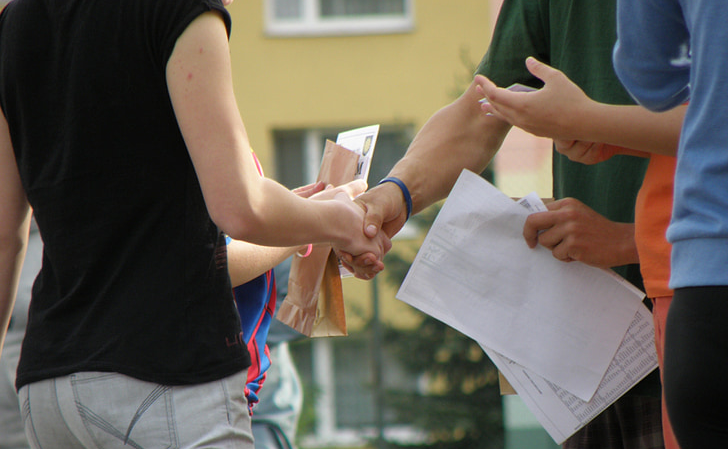
On Tuesday, May 19th, I spent about six hours standing in the 100 degree heat, manning the polls in Philadelphia. It has become something of a tradition along the I-95 corridor: when Pennsylvania has their primaries in May, Delaware people come up and help, and Pennsylvania returns the favor in September. It’s a nice show of solidarity, but it puts me at somewhat of a disadvantage when talking to voters, especially when I’m going up against someone like the man I shared that stretch of sidewalk with for the afternoon.
Dennis had lived in the neighborhood for forty-five years, and was running for re-election to the ward committee as a firm supporter of the city machine. For decades, he had worked in the financial services industry while getting deeply involved in the neighborhood. Now he serves on the neighborhood association and the boards of many local non-profits and planning committees. As we talked, he was able to give an in-depth overview of the different parts of the neighborhood and how they had changed over the past several years. When voters came up, it seemed to be about a 50/50 chance that he knew them personally, and he would talk to them for minutes as I lingered in the background with my voter guide and literature. But after the election results were in, I went back to check how things had gone at my polling site. My candidate had won by 24 points.
As much as I would love to brag, this result was not caused by any secret sauce that I have for poll greeting. Rather, it was caused by changes in the political system that go far beyond Philadelphia or any one election cycle. Modern political machines, which already barely resemble the strongest machines of historic legend, are further crumbling in the modern era, driven by an erosion in the power of the people who lead them. These leaders are not usually the typical backroom schemers that we think of in political machines, but rather a different type of community leader — a leader that increasingly lacks the power that they had even just a decade or two ago.
A Brief History of the Machine
To understand how political machines exist today, it’s important to understand where they came from. The heyday of the classic political machine broadly corresponded with the heyday of American cities: the late 1800s through the first half of the 1900s. Political machines thrived in a unique combination of social and political dynamics. On the social side, big American cities were largely composed of a marbling of different tight-knit ethnic groups. Whether Irish, Italian, Polish, or Black, different ethnicities had their own worlds of association: social clubs, businesses, charities, and even unions. Such dense, cross-class networks were great foundations for political party organizing, and the Democratic and Republican Parties built even further on top of them. As George Washington Plunkett, a well-known Tammany Hall politician in the late 1800s, noted, much of his time as a political boss was spent going to social events and connecting young men with party glee clubs and baseball teams. By making the party an intimate part of people’s everyday lives, party machines could more easily turn them out in the next election.
This system required an extensive system of political patronage. When a party had control over government, they were able to hand out money and jobs to those who had supported them, providing the resources necessary to keep all the different gears turning within the broader party apparatus. By the turn of the century, this system was already coming under attack. Civil service reform was implemented within the relatively small federal workforce in the 1880s, but patronage was still a relatively powerful force in state and local governments well into the 1900s. Moving to Delaware, political appointments to low-level positions were not fully eliminated within city and state government until the 1960s, when federal requirements finally ended the practice. Throughout the middle third of the 1900s, the State Highway Department was a much-desired political prize for the Democratic and Republican parties, as it had hundreds of low-level seasonal positions which could be handed out to party faithful.
Therefore, party machines had been weakened by the 1960s, but they were by no means dead. In many places, including Delaware, those patronage positions had been replaced instead by party apparatuses during election season which paid hundreds of people a decent wage to turn out voters in their community. After the money spigot was turned off from the state, it was replaced by corporate donors or big unions who used their wealth to buy political influence within the parties. Despite the fusion of corporate cash, the organizational bread and butter of these machines was still the more blue-collar local institutions — clubs, unions, and churches — which provided the muscle to make the machine work. As a result, party machines were not particularly ideologically coherent projects. Big-city machines made up one of the core pillars of the New Deal coalition, and were even important drivers of the Great Society programs, but they were some of the biggest opponents to elements of the civil rights movement and the New Left which began to crop up in the latter half of the 1960s. The machines’ ideology was the reproduction of its own power, and a new generation threatened that. For these younger stalwarts, therefore, “bossism” was just as much of a problem to solve as racism or imperialism.
The process of ridding the political system of machine influence took its first big step forward after the 1968 election, when the Democratic Party underwent a national reform process which trickled down to the local level. In Delaware, one of the most prominent products of this effort was Joe Biden, who served as an officer of a reform group known as “Democratic Forum” before running for county council and then US Senate. Just as the composition of the political machines was not fully coherent, this reform movement also contained a few different strains. On the more radical side, many Black civil rights champions sought to topple the party in favor of a more social democratic or socialist alternative. In most places, especially Delaware, they were unsuccessful. The real successes of the reform movement instead came from affluent white professionals.
In Delaware, the process was not quick, but its culmination was seen in the aftermath of the 1988 election. For over a decade, the chair of the New Castle County Democratic Party had been Gene Reed Sr, a former ironworker from Claymont who was known for his hard-nosed political tactics and his anti-democratic grip on the local party committees. He was also known for his loose interpretation of election laws, which got him in trouble after he distributed a number of campaign flyers during a New Castle County election which were not properly marked with who paid for them. This mistake led to an investigation from the Attorney General’s office that led to wider revelations of illegal straw donations. With Reed in legal trouble, then-Congressman Tom Carper saw an opportunity to make his mark on the party by throwing the ironworker out and replacing him with his own candidate: a chemist named Joseph Reardon. Running a well-funded campaign drawing largely from white professionals, Reardon handily defeated Reed in the race for New Castle County Democratic Party chair. While some holdovers existed, the end of the 1980s largely saw the end of the traditional political machine in Delaware. But what replaced it?
The New Community Leaders
If the old political machine had largely been a blue-collar affair, rooted in the local clubs and institutions of that demographic, what replaced it was a more white-collar, civic-minded group. A local ward or RD leader was less likely to spend time in a union hall than they were in an office building, and their type of community involvement often looked somewhat different. They still volunteered at a variety of different groups, but they were more likely to serve on a board rather than a commission. They would almost certainly be involved in their civic association, and more than likely a church. To sum it up: they were community leaders.
For most of the remaining century, these civic institutions remained fairly strong, and they also replicated some of the patterns of the machine that the new community leaders had fought against. The ideology of the machine is the reproduction of its own power, so it doesn’t matter whether you’re an ironworker or a chemist — once you get control over an organization, you want to keep control of it. The tactics of enforcement certainly evolved in the switch from blue-collar brawlers to white-collar professionals, but the purpose didn’t change quite as much. Many new leaders even learned to live with some of the blue collar elements of the party to keep things under control. To this day in Delaware, many local RD or ward leaders come straight out of central-casting from a mid-century political machine, though they don’t have nearly as much power.
As a result of their strong community involvement, the new party leaders still were able to exercise a good deal of control over the way their parties ran. This was made easier by the precipitous drop in turnout seen across the country in the last few decades of the 1900s and continuing into the early 2000s. In the late 1960s, presidential turnout nationwide was nearly 65 percent, but by the 2000s it was just over 50 percent. These few decades saw the peak of strength by many of this new generation of party machines. In Delaware, this was also the heyday of the Delaware Way, a pro-corporate bipartisan form of politics that thrived among the very same people who were largely running both parties.
However, at the same time, the source of strength for these machines was eroding from under their feet. As Theda Skocpol observed in her book Diminished Democracy, voluntary membership-based organizations have rapidly declined in size and influence in the last several decades. The drop began during the 1970s, when social distrust spiked in the wake of economic and social upheaval, but it has only continued since then, driven by new technologies and increased atomization. In 2026 compared to even 1988, your average person is much less likely to be a member of a civic association, social club, or any voluntary membership-based organization. Instead, as political engagement has begun to rise again since 2016, that energy has largely been entirely independent of any organization, especially any traditional local civic groups.
This transformation has had downstream, though uneven, political consequences. Many communities are known for having stronger civic lives, and in those areas the existing political infrastructure — liberal or conservative — tends to be a bit stronger. Lower-turnout elections, where a disproportionate percentage of the electorate is older and engaged, political machines can have a lot more power and influence even in more atomized areas. For the most part, however, traditional political organizations have lost an immense amount of power in our hyper-politicized world. To the extent that they still exist, party machines are often just another club that a growing majority of people are not a member of. The opinion of local community leaders matters much less than the opinion of whatever national political figure someone has become a fan of.
As someone who has benefited from this change, I obviously don’t think that this is entirely a negative development. Political machines, no matter how enlightened, always have a tendency towards exclusion. The decline of those machines has allowed traditionally-excluded groups to participate in political life in ways that have never been possible until recently. This has opened up the possibility for more progressive and anti-establishment forms of politics whose long absence has allowed for the consolidation of wealth and power among a small elite. But the downsides are abundantly clear. On the Republican side, the erosion of any traditional middle layer of party machinery has left the entire party open to top-down control of Donald Trump. On the Democratic side, the erosion of these old institutions has been one of the key causes of declining power in blue-collar areas like those in the Rust Belt.
At the grassroots level, I’ve also seen that there are far too many people who are politically engaged but have no real idea how to work with other people. One of the biggest benefits of the older networks of clubs, unions, and churches was that they gave everyday people a consistent opportunity to practice democracy and collaboration in their personal lives. Without those opportunities, those same skills have to be learned in higher-stakes elections and policy fights, and some of those muscles might just never grow back in the same way. In all fairness to the older party people who I usually disagree with, I can sometimes understand their frustration with the young reformers who come in with none of the skills and connections they’ve been building for decades.
So what comes next? The answer is unfortunately far outside the control of any individual person or group. The country’s social infrastructure is rapidly shifting in the world of social media and AI, and we can’t fully predict what will emerge from it. However, those of us who spend hours each week building the future of the political system, we need to keep some things in mind. We need to remember that even as the world changes, those social connections remain as important as ever. Studies show that relational outreach remains by far the most powerful form of political persuasion, especially at the local level. With traditional organizations in decline, we need to find ways to reach out to people who are not already involved, who don’t self-select, and build the skills of how to be a person working with other people.
As we build power, it is important to hold ourselves to a high standard. As we have seen in previous generations, the establishment never starts out as the establishment. There is no guarantee that a more populist, progressive vision will become anything close to hegemonic within the Democratic Party or society as a whole. But whether we win a sliver of power or the whole pie, any power we do win has the power to corrupt. Even within the small area I control, I have already had to reckon with problems of cliquishness, anti-democratic practices, and broad exclusionary behavior. While corporate influence or backroom deals can make these things worse, they’re always creeping at the back of any organization. Only through eternal vigilance can the community leaders of tomorrow build something better than the community leaders of today.