
“So sad to have missed this,” wrote Sheena Ferrell on the MOT (DE) Residents Facebook page under a post reminding members to vote in the March 2 town council election. “Didn’t know we were having one.”
The Middletown town council election saw an especially low turnout with just 405 votes. Three incumbent council members — Craig Sherman, David W. Thomas, and Bruce Orr — were reelected for a two-year term to the seven-member council, and challenger Dr. Michelle Williams was defeated.
The last time Middletown saw such a low turnout was 12 years ago, in the 2014 town council election, when only 388 votes were cast.
“Sad turnout,” wrote Susan Kemer on a March 3 post from the official Middletown Facebook page announcing the election results.
Middletown has a population of 25,686, according to 2024 U.S. census data, with more than 72 percent over the age of 18 eligible to vote. Even considering qualifying factors such as residing within the incorporated town limits and citizenship status, a voter turnout rate of just over 2 percent for a population of that size is “dramatic,” said Dr. David Redlawsk of the University of Delaware.
Redlawsk, an expert on municipal politics and member of the elections board for Newark, said that the low voter turnout is primarily the result of two factors: the day the election was held, and a lack of awareness that it was happening.
He explained that election reforms instituted over a century ago separated municipal elections from the state and national election cycle held during even-numbered years in November. They were aimed at fighting widespread political corruption by creating several “off-cycle” local elections, including for mayor and school board trustees.
“It was very purposeful for the reformers because they wanted local elections to focus on local issues, the local situation, and not be combined into state and national issues,” he said.
The reforms were designed to be non-partisan and to “separate government from politics. The reformers thought local governments should be run like a business, and you do that by trying to get politics out of local government. You do that by making it less likely that people will participate.”
Low voter turnout in Middletown is not new, nor is it unique to the town. Historical election data dating back to 1956 show that the average votes cast per election is 502, with 2021 having had the highest voter turnout at 1,226 ballots cast. Redlawsk said that Newark, with a population of just over 30,000, has the same issue and will not be holding a council election in April because “there aren’t enough candidates.”
The elections board for Newark, much like the Middletown equivalent, is made up of volunteers who are responsible for administrative aspects of the election, such as ensuring pollsters oversee the balloting. Its members have discussed how to increase election awareness like utilizing social media, but ultimately, it’s up to the candidates to advertise their campaigns, said Redlawsk.
Delaware state law dictates that, at a minimum, municipal elections must be advertised at least twenty days in advance, candidates must file by a certain date, and information about absentee ballots must be made publicly available; a dropdown menu on the Middletown website dedicated to Election Information outlined this.
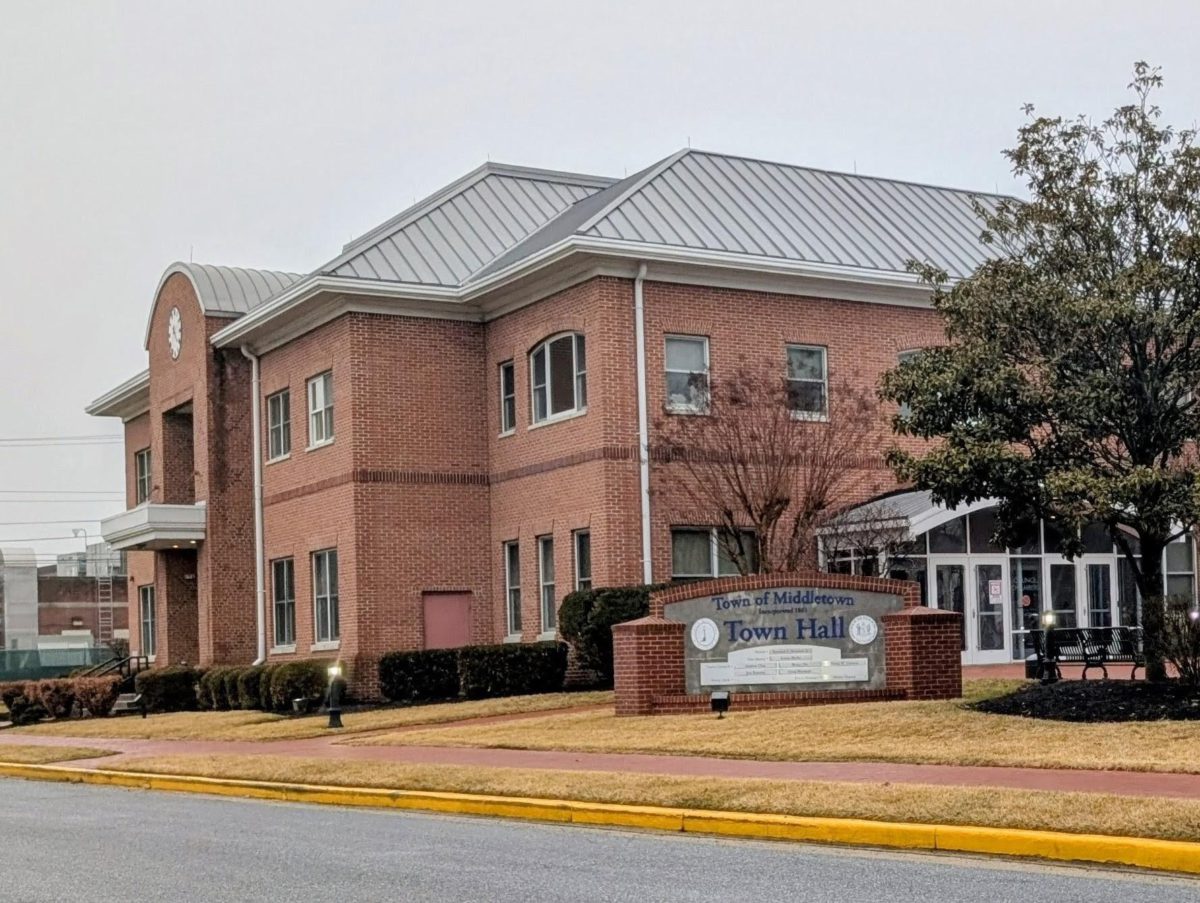
The election was mentioned at the beginning of the February 2 town council meeting by Mayor Kenneth Branner. One resident reported receiving an information card in the mail that showcased the three incumbent candidates and featured the town logo, and yard signs were spotted. On the day of the election, the Middletown Facebook page posted a notice, while two signs pointed to polling stations at the Middletown Town Hall.
During nearly the same period, between February 3 and February 26, the Middletown Facebook page posted four notices concerning the Levels Road dog park.
“When you had local papers, daily papers, or even weekly papers that people read, there would be stories about elections, stories about candidates, letters to the editor, and all the rest of it. That’s fallen off a lot,” said Redlawsk.
“It still sort of flies over most people most of the time, because most of us are busy. Our media is focusing us on national or international events, maybe state events. Most people are really busy just keeping their daily lives going. And it’s hard to break through that; for the local government to get the word out, even if they try.”
Redlawsk believes that municipal elections should revert to the state and federal election cycles, something Wilmington has always done. The result is a typically healthy voter turnout amid competitive elections with highly visible candidates. Right now, “the structural system works against people knowing about elections and participating in elections.”
Correction: An earlier version stated that the total average voter turnout was 720; that was calculated for what is considered Middletown’s modern era from 2002 to 2025, rather than across all elections since 1956.