
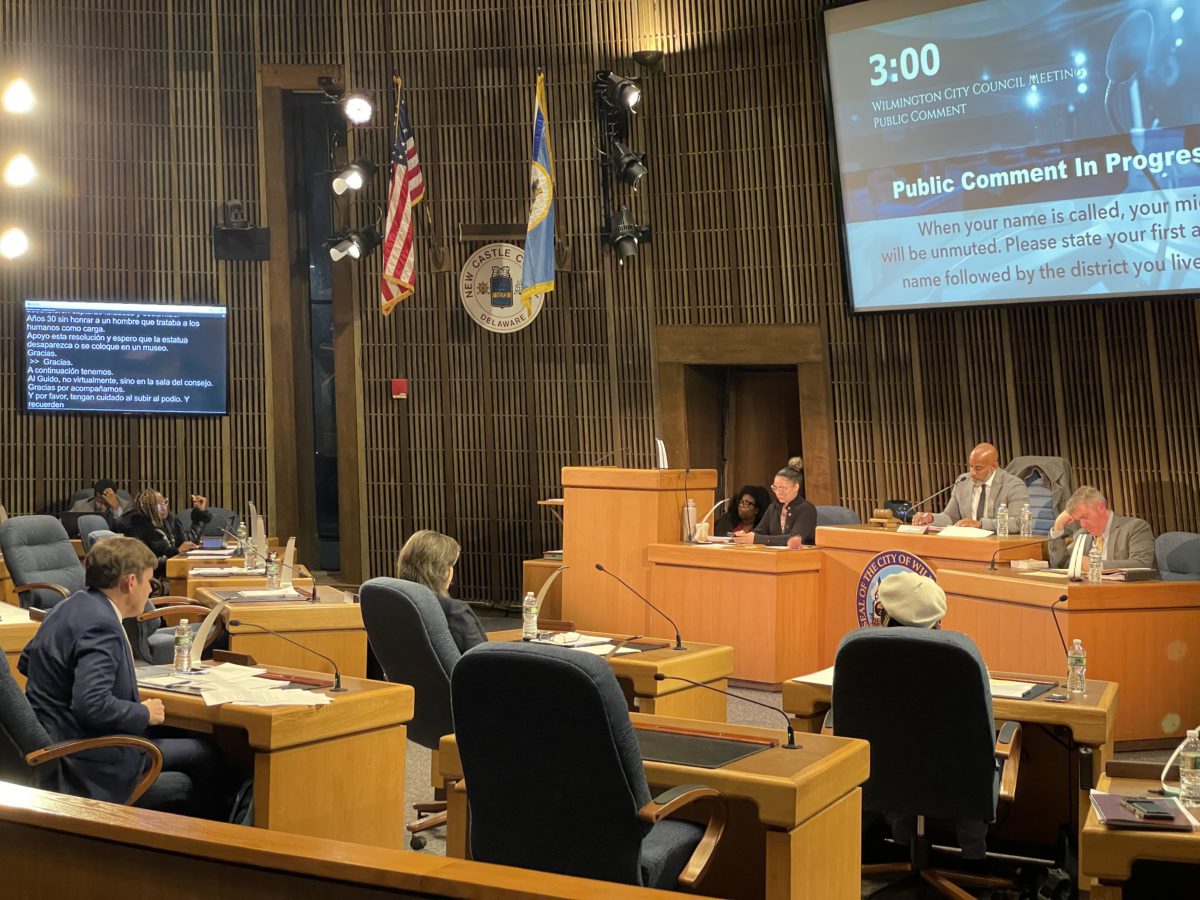
On the evening of February 19, 2026 at the Louis L. Redding City Council Building in Wilmington, community members and city council debated a resolution sponsored by Councilmember Shané Darby that opposed the proposed reinstallation of a Christopher Columbus statue previously removed from display in the city in June 2020. Resolution #0184 maintained that the reinstallation of the statue “runs counter to our City’s commitment to ensuring that our public spaces reflect truth, accountability, and shared humanity.” The resolution characterized the statue’s potential return as perpetuating “harm and marginalization” as well as the “historical trauma and exclusion” of Wilmington’s Indigenous peoples and their descendants.
The summer of 2020 was marked by protests nationwide after the murder of George Floyd by police officers in Minneapolis put a spotlight on racial inequities in the United States. The unrest was exacerbated by the effects of the COVID-19 pandemic and violent backlash from the first Trump administration. In the wake of the public uprising then-Mayor Michael Purzycki cited concerns over potential damage and an intention to have “an overdue discussion about the public display of historical figures and events” as rationale for the statue’s removal.
Other business at the council meeting Thursday marked the observation and celebration of Black History Month. Yet the tone and mood in the room drastically soured as public comment shifted to Councilmember Darby’s resolution.
Community member Rob Savarese gave the first public comment. He used his time to accuse Darby of hate and bias against Italian-Americans and likened her resolution to historical lynchings. This drew an admonishment from Council President Trippi Congo, reminding commentators not to address specific councilmembers. Savarese then likened the resolution to maligning Martin Luther King Jr. before his time ended.
Rita Carnevale, a small business owner in Wilmington, cited the existence of black slave owners for her in-person comment. Carnevale did not clarify if she supported or opposed the resolution before ending.
Meme Sebelist, who is of Italian-American descent, gave public comment virtually in support of the resolution and shared historical accounts of Columbus’ enslavement of and sexual and physical violence against Indigenous women and Spanish settlers. She also passionately objected to the comparison of Columbus to King Jr. The last two public comments were sympathetic with Italian-Americans who were struggling to grapple with younger generations’ characterizations of Columbus, but supported the resolution.
Darby defended her resolution, clarifying that she believed public land and taxpayer dollars should not be used for the statue because its reinstallation would be a “slap in the face” to descendants of enslaved people. Councilmember Johnson opposed the resolution since he said he represented the Italian-American community in Wilmington and wanted to support their wishes. Many councilmembers opposed the resolution on the fears of promoting historical censorship, citing the recent removal of a slavery exhibit in Philadelphia by the current Trump administration.
Council President Congo reflected on the public comment with mild shock. “People who have been the most victimized always have to be the most forgiving.”
Congo and Councilmember Owens were the only two other supporters in addition to Darby. The resolution failed to pass with 3 Yay votes, 2 Present votes, 6 Nay votes, and 2 voters absent.