
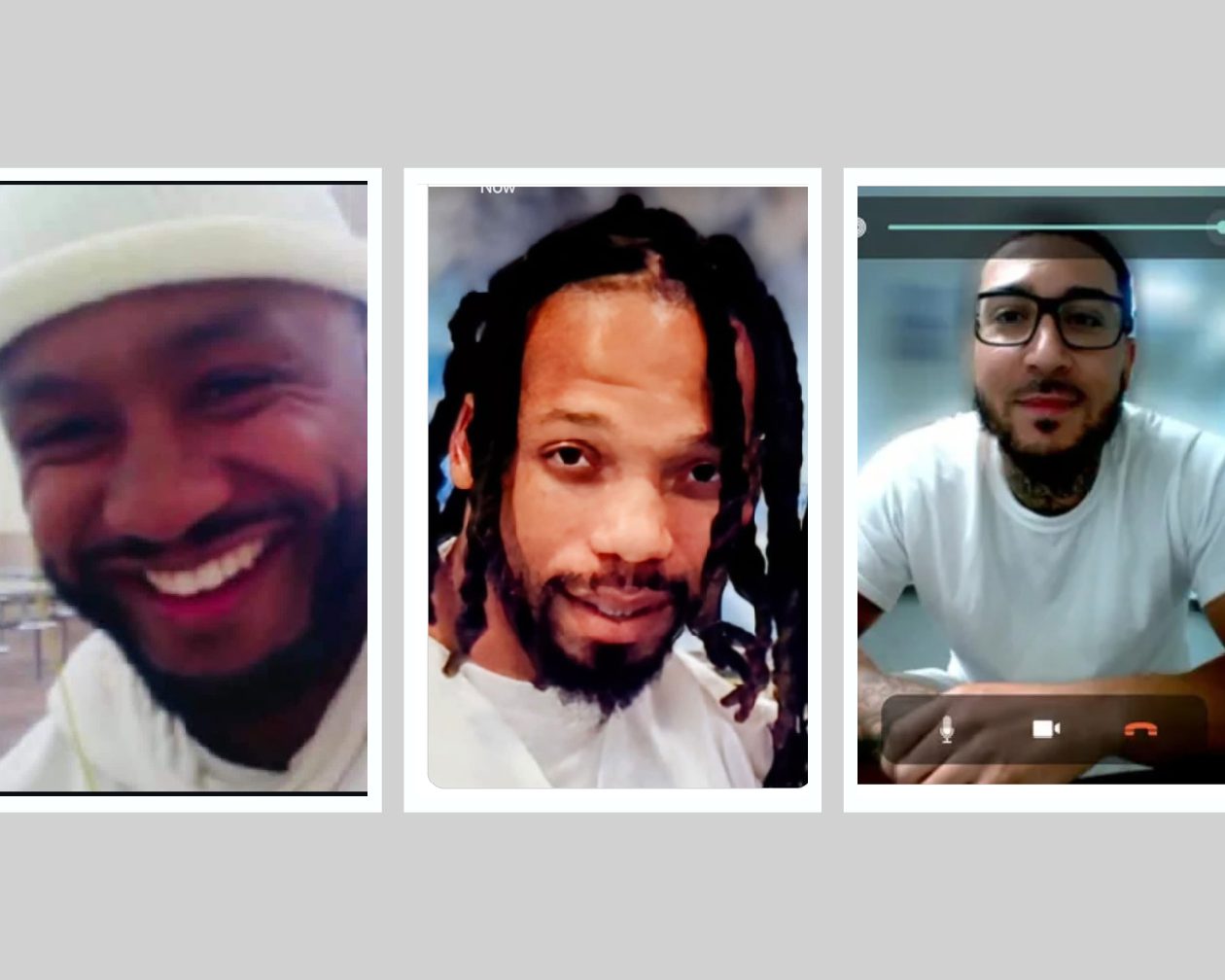
On December 22, Fenel Baine, who is currently serving a 91-year sentence for manslaughter, filed a lawsuit claiming that multiple officials at the Delaware Department of Correction violated his civil rights after a transfer from James T. Vaughn Correctional Center to Sussex Correctional Institution.
Baine alleges that ten Department of Correction staff members, including Warden Brian Emig and Commissioner Terra Taylor as well as several individual sergeants, directly facilitated or were complicit in an illegal transfer. In his lawsuit, Baine claims the transfer was an act of retaliation against him for speaking publicly about the lack of air conditioning in the W Building at Vaughn last summer. The lawsuit also highlights other retaliation concerns by D.R.E.A.M. Initiative members, like Joshua Chattin. The D.R.E.A.M. Initiative is a non-profit established in 2024 that aims to improve rehabilitation efforts for incarcerated people and those who are released.
In the lawsuit, Baine said that Emig threatened retaliation during an in-person July 17 meeting. He also outlines how a lieutenant at Vaughn violated his First and Fourth Amendment rights through a “faulty conviction” at a disciplinary hearing, and that a sergeant fabricated a disciplinary report to justify the transfer.
Vaughn has been the subject of retaliation claims in the past. A 2017 uprising at the prison resulted in a correctional officer being killed on duty, followed by a federal lawsuit where current and former inmates claimed that they were beaten and tortured for months after the uprising.
Baine said he is seeking a preliminary injunction on an emergency transfer that he claims Sussex Correctional Institution conducted in order to send him to an out-of-state prison.
Baine appealed his transfer in a letter to Robert May, Chief of Delaware Bureau of Prisons and former Vaughn warden, on December 23, writing that he was “recently classified in an Interstate Compact by SCI prison.” In the appeal, he blames May for the vote to transfer him, writing that he vetoed a vote to not have him transferred.
An interstate compact is a legal vehicle for transferring inmates from one state to another.
The warden’s office of Sussex Correctional Institution declined to comment. We have not confirmed if the transfer is taking place or not.
How did this all start?
Jennifer Chattin’s phone lit up on July 21 at noon with a text message through Getting Out, a messaging app for incarcerated people, from Hayward Evans, who is imprisoned at James T. Vaughn Correctional Center in Smyrna. The man known for his bright smile was frantic.
“They just move fenel out the prison as well so we can only say this is more than what they are saying its not !!!!! After what though what have we done to be punished for speaking up we need help Mrs. Jennifer this is not right,” the text read.
Evans, 39, is one of the founding members of the D.R.E.A.M. Initiative. He was convicted at 14 years old of first-degree murder and two counts of 1st degree attempted murder in 2001. He and his family have pleaded his innocence from the beginning.
Evans sent the text to Mrs. Chattin after the Delaware Department of Correction moved two of the founders of the D.R.E.A.M. Initiative out of Vaughn.
“It has to be retaliation. But can we definitively prove it? Yeah, according to who we’re in front of,” said Evans in an interview with the Delaware Call. “What caused this to happen? We were speaking truth. What were the effects? This person got moved, this person got moved. Self-explanatory.”
The first claims of retaliation started in July 2025, after Chattin, 32, and his mother spoke publicly about the lack of air conditioning within the W building at Vaughn in late June and early July. On July 4, Baine, Evans, and Chattin spoke on the Highlands Bunker podcast to talk about prison conditions. Not long afterwards, Chattin was moved 37.5 miles away to Howard R. Young Correctional Institution in Wilmington on July 14. Fenel Baine, 39, was moved to Sussex Correctional Institution six days later. Evans remains at Vaughn. It is unclear if other inmates in the building were transferred to other prisons or if it was only these two.
According to Baine’s lawsuit, on July 17, three days before he was transferred, he met with Warden Emig and other staff at the prison in the Delta Building across from the sergeant’s office. He claims they told him there were reports that tension was brewing in the building and that Emig wanted to split the group up for the moment to cool down. Baine and Evans disagreed that there was tension. Evans believes the higher-ups saw Baine and Chattin as threatening.
The warden’s office did not immediately respond to a request for comment.
“While the Department of Correction does not discuss publicly the details of individual decisions to move, transfer, or relocate incarcerated individuals, these movement decisions were made in accordance with established protocols to help maintain a safe and secure environment for the incarcerated population, staff, and visitors,” in a statement by Jason Miller, DOC Chief of Communications and Community Relations.
All three men said the retaliation did not stop after they were separated. The men believe the separate prisons have continued to punish Baine and Chattin for speaking out.
Since the transfer to Sussex, things seem to have gone from bad to worse for Baine. Heather Christopher, a partner of the D.R.E.A.M. Initiative, emailed Paul Shavack on August 2, detailing the retaliation that he faced.
“I am writing you concerning the matter surrounding Fenel Baine and the AC controversy. It is my belief that he is 100% being retaliated against by the DOC for his perceived involvement in the AC scandal in Smyrna James T. Vaughn Prison.”
Baine claims that he was not initially involved in the air conditioning advocacy until he saw it as an opportunity to show how “deplorable prison conditions contributed to a less safe society.”
Christopher wrote that Baine was moved to medium security (from minimum security) without notice, a day after Chattin was moved to Howard R. Young. Baine said that he also lost his job and was told by the warden that his move was not retaliation, which Baine disagrees with.
She explained that Baine, Christopher, and the Wilmington City Council had a scheduled meeting on July 18 to promote the D.R.E.A.M. Initiative. Baine claims that he told the warden about the meeting beforehand and that he was supportive of it. However, he said the warden warned him against advocating for better prison conditions. Later on that evening, Christopher said Baine was given a class 2 write-up for 3-way communications that was eventually voided because there was never a hearing.
This made Baine upset, so he messaged Mrs. Chattin on July 20 saying, “Everybody is so worried right now because the retaliation campaign is in full swing so they’re hesitate to talk to you or me or your son. I remain immovable because this DREAM will be established one way or another. These are the last days and people better get their souls right because the judgement of God is coming. I’m just one many soldiers in the army of God preparing the way for his kingdom so whatever they chose to do with me I count it all joy.”
He was transferred to Sussex Correctional Institution later that day. He received a write-up once he got there for the message he sent to Mrs. Chattin, wrote Christopher. She said that they found the message to be threatening. According to Baine, he was given another write-up upon intake for “frivolous items” such as headphones, a radio, and pictures of two non-nude females.
Shavack wrote back that same day, “Please be assured that the information and allegations you have provided will be reviewed and evaluated through the appropriate internal processes.”
That’s the last Christopher heard about the matter.
Since then, Baine has been moved to various tiers within the prison, and Christopher said there are talks about moving him out of state. Baine has since started a podcast called Fenel Unchained, where he discusses his experiences while incarcerated. He also uses the platform to plead his innocence.
In a December 4 Facebook post, Baine wrote, “u created a non profit to prevent the younger generations from going to prison by having those one on one relatable conversations and speaking life into them and so much more.. Instead of getting the good back from all that.. The DOC decides to write u up on frivolous disciplinary actions against u, retaliated against you for reaching to public officials for no AC in a building during a heat wave, they transfer u prisons with inhumane conditions with people in a higher security even tho u have never been written up for any violent fights.”
He continues to say that the DOC keeps finding reasons to write him up so that the Governor will deny his commutation or reduction of a sentence.
“All I got is my hope. Don’t rob me of that,” Baine said in a separate post as he took a deep breath. “I don’t know how much more I have left. I’m asking for y’all to just put me on death row. I’m tired of being a burden to society, to my family, to everybody. Just put me on death row because obviously I’m not fit for this world.”
This has not only affected Baine but his loved ones as well. His mother, Nealine Baine, wants to know the reason for his treatment.
“What is the reason y’all holding him? What’s your reason for holding my son in there?” said Mrs. Baine. “Y’all taking his words out of context. They want him to close his mouth but he won’t close his mouth.”
Joshua Chattin was the first in the group to be transferred out of Vaughn. He is currently serving a 14-year sentence for deadly weapon and drug-related charges from 2016. He said the DOC never gave him a reason for his transfer. Two days after he arrived at Young, he received a disciplinary report that said he “will be receiving a class 2 write-up for the following infraction: 2.14 communication,” which refers to third-party communications. According to Miller, it is policy that third-party communications—conversations between an incarcerated person and more than one other person—are not allowed.
However, as noted by the News Journal and by multiple loved ones of inmates, that rule is rarely, if ever, enforced. According to Chattin, this was the first time he had ever been written up for a third-party communications violation in his almost 10 years of incarceration. Chattin is not saying that he never broke the rule; he has had many third-party communications with elected officials, the media, and family members before July. So, the question is, what makes this instance different?
In a letter, signed by Warden Brian Emig on July 15, five instances are listed from July 9 to July 14 of third-party communications violations. On July 22, before she received the letter, Mrs. Chattin reached out to Paul Shavack, DOC Chief of Staff, via email after being unable to receive calls from her son. He replied, saying that her “telephone access was suspended for a period of 60 days, effective July 15, 2025.” Two months passed before mother and son could hear each other’s voices again.
“I’m doing as best I can under the circumstances. I’m still pushing forward,” Chattin said in July. “Not being able to speak to mom is debilitating. To be retaliated against this way is like a double-edged sword. Damned if you do, damned if you don’t. I still choose to do good.”
Delaware Call filed a Freedom of Information Act request for the third-party communications disciplinary reports issued to Chattin from December 9, 2016 to July 21, 2025 and was told “the supervision history and all other case records obtained in the discharge of official duty by any member or employee of the [DOC] [is] privileged” and “not subject to public discourse.”
Chattin said that he has not faced as much retaliation since being moved to Howard R. Young.
Mrs. Chattin reached out to DOC employees, elected officials, Gov. Matt Meyer, and even Beyoncé, in the hopes that someone would listen and speak out against the department’s poor treatment of the inmates, including her son. Any time Chattin or other inmates would have a problem, like restricted communication with their loved ones or unethical conduct by correctional officers, she would reach out to Paul Shavack, DOC Chief of Staff.
“I have had constructive and positive engagements with Jennifer Chattin regarding the concerns she raised about the treatment of her family members,” Shavack wrote in an email. “I appreciate her willingness to engage directly, which helps us address issues promptly and ensures that all voices are heard.”
Chattin recalls one incident in September this year when a correctional officer ordered five men assigned to work in the kitchen to be strip-searched before their shift. Instead of picking inmates to be searched based on suspicion, Chattin claims that the correctional officer asks the men to randomly volunteer. He said that it is not their job to volunteer for this. When no one volunteered, Chattin said the officer threatened all of them with strip-searches. Afterwards, Chattin said he filed a grievance through the official process. He said the offense was referred to the area Lieutenant for further investigation.
DOC policy says that strip searches must be done for security purposes only. Incarcerated individuals are subject to these searches if they are returning from areas with “controlled tool inventories” like the kitchen, but it is not clear if these searches are necessary when entering areas like these, as in Chattin’s example.
According to the Department of Correction’ 2025 Family and Friends Handbook, reports may be “communicated directly to the staff member’s unit commander or the facility Security Superintendent for review and investigation.” For concerns that can’t be addressed through the grievance process, such as court orders or parole decisions, there is a separate appeal process. Towards the middle of the handbook, it says, “The DOC has a zero tolerance policy toward all forms of sexual abuse and sexual harassment.”
Shavack wrote that the DOC “takes every report related to staff conduct seriously” and that actions are reviewed to see if they are within department policy. He could not discuss specific staff actions or inmate disciplinary matters. Also, he did not specify what happens when an officer is accused of misconduct.
Mrs. Chattin first helped with outreach for the D.R.E.A.M. Initiative through the air conditioning incident by speaking to elected officials like Wilmington City Councilmember Shané Darby and Representative Larry Lambert. Through that, she has gotten more involved with helping inmates like her son. Mrs. Chattin believes that advocating for better prison conditions and treatment of inmates is the right thing to do, but there were times when she questioned it.
“It makes you feel like it was all for nothing. Now, it wasn’t for nothing. I know that. Now, 300 men have air conditioning that didn’t have it, but now you get punished,” said Mrs. Chattin. “That’s not the way life’s supposed to be. You don’t get punished for doing good.”
Mrs. Chattin has a usual procedure when an inmate or their family member brings up an issue within a prison. First, she contacts the individual prison. At the same time, she is talking to elected officials like Shané Darby. Darby will usually post about the issue on her Facebook page to put community pressure on the DOC. Once Mrs. Chattin has contacted the prison, she gives them five days to get back to her. If they don’t get back to her by that time, she emails Paul Shavack. She says he is usually the only one who responds back to her. After that, she waits to get a response. She gives Shavack a week to respond.
“It shouldn’t take longer than that. So, now we’re into two weeks and this guy (inmate) is still suffering from whatever just happened to him,” said Mrs. Chattin. “If I don’t hear anything, then I just go higher and higher. So, if I have to take it all the way to Matt Meyer, I will take it all the way up to Matt Meyer’s office.”
For the D.R.E.A.M. Initiative, they continue to advocate for incarcerated individuals’ rights and proper rehabilitation. For Evans, his wide smile has not diminished. For Chattin, he continues to help others in incarceration. And for Baine, he continues to speak out, hoping someone will truly listen.