
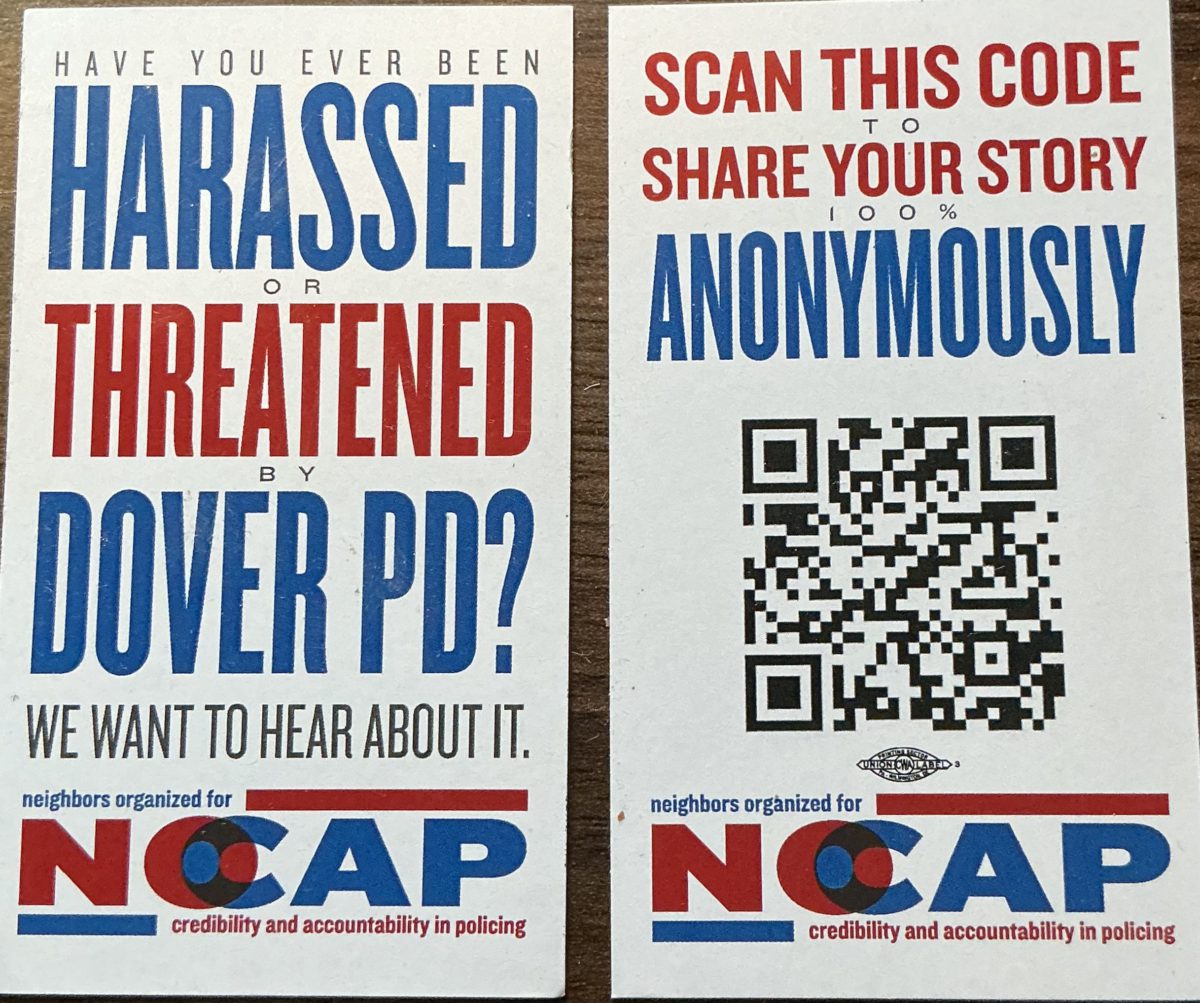
Police misconduct in Delaware is similar to most places: it takes many forms, sometimes subtle, sometimes obvious. The term ‘police misconduct’ is shape-shifting and ever-evolving, and sometimes difficult to define. Here’s how to recognize the generally agreed-upon tenets that constitute police misconduct, and the lesser-known ones, each with a Delaware-specific lens.
What is police misconduct?
Excessive force
There are many interpretations of what excessive or improper use of force can look like: chokeholds, kneeling, hard grabbing, pushing, shoving, various holds, hitting or punching, and the discharging of a weapon. The important thing to consider is whether the actions and behaviors of law enforcement are relative to the situation.
The question of whether excessive force occurred in Delaware when, in 2013, a police officer kicked an unarmed Lateef Dickerson in the head. Ultimately, the charges of assault against the officer were dismissed after he claimed he was “scared” because he was told Dickerson had a gun.
In another example, Lymond Moses was shot and killed by New Castle police in 2021 after trying to evade arrest. His family settled a lawsuit against New Castle County and the officers involved for $1 million, claiming wrongful death and excessive force.
Two officers from the Dover Police Department have been accused by resident James Mayhall of police brutality after they allegedly tackled him while he was picking up his grandson in 2025. He alleges he was beaten and knocked to the ground, where he fell unconscious and left with serious injuries.
Police misconduct can occur even while they are off-duty, as was the case with Delaware State Police Officer William Walker, who was charged in 2025 with assault after getting into a fight outside a pizzeria in Lewes.
Searches, arrests, and probable cause
Under the United States Constitution, all citizens are protected from unreasonable searches and seizures unless there is probable cause. Probable cause does not have a set definition, but is agreed to involve any reasonable suspicion of criminal activity. This loose interpretation means that both searches and probable cause are two areas of police misconduct that often arise.
“Some searches do not require probable cause: those are known as “Terry Stops“,” said University of Delaware Associate Professor Dr. Aaron Fichtelberg, who specializes in Fourth Amendment law.
Police dishonesty is another form of police misconduct that also involves racial and bias profiling, especially in traffic stop or stop-and-frisk situations, falsifying documents, obstruction, and witness or evidence tampering, the latter of which Newport Police Chief Michael Capriglione was found guilty of doing in 2018.
“Racial profiling is complicated because it refers to a number of different things, not all of which are illegal,” said Fichtelberg. “Stopping a person because they are Black is illegal, but if you have a reasonable suspicion that they are involved in illegal activity and they are Black, it is lawful,” said Fichtelberg. “When the police are dishonest in their job, I refer to it as “overenthusiastic policing” – which again, is sometimes legal (like pretextual stops).”
“Proving bias in an officer’s action is very hard because you have to prove motive. That can be very hard to do. It’s always important to document and if possible film police interactions, but just because a person believes that they were profiled, unless they can show that the officer lacked probable cause to search, it’s nearly impossible to make their case.”
Litigation is ongoing from a 2023 class-action lawsuit filed by the American Civil Liberties Union of Delaware alleging a “pattern and practice of unconstitutional policing by the Wilmington Police Department,” that includes “stopping motor vehicles without cause,” unreasonable searches and arrests without a warrant, and “racially biased policing that is evidenced by large racial disparities demonstrating the targeting of Black pedestrians and drivers based on their race.”
Violation of rights
In the case of Lymond Moses, his family also claimed that police had violated his civil rights – the right to life – when they shot and killed him.
Many times, a violation of rights involves not notifying a citizen of their rights at all. If a police officer does not read a person their Miranda rights – specifically the right to remain silent (and not self-discriminate) immediately upon arrest, this is considered misconduct.
Former Delaware State Police Officer Jamal Merrell was found guilty in 2023 of violating federal civil rights law after stealing electronic devices from a shipping company while on duty, saying that he was conducting an investigation. Another state trooper, Dempsey Walters, holds the distinction of Delaware’s first-ever conviction for Deprivation of Civil Rights after being found guilty of assaulting two youths.
Most types of police misconduct involve violating a right. Citizens are allowed to record officers in a public place (free speech), protest and gather (assembly), be protected from searches and seizures (mentioned above), and not be subject to excessive force (cruel/unusual punishment).
Harassesment
Harassment includes behavior that is harmful, annoying, threatening, intimidating, coercive, or meant to cause distress. It can include using obscene language, gestures, ridicule, and even extortion. This can happen in any encounter, like when an officer is responding to a call, or during an arrest or interrogation.
Former Delaware State Police Officer Ryan J. Mitchell plead guilty to harassment and misuse of a computer charges in 2011, According to a statement issued by DSP, Mitchell was found to have “improperly accessed information about the victim and her husband and made continuous unsolicited contact via e-mails, letters, and phone messages to the victim.”
Seaford Police Department officer Kyle Linville was charged with multiple offences in 2024, including harassment, after a highway altercation where Linville “shouted obscenities at the victim, scratched the paint on his vehicle, issued verbal threats, and point his handgun at him,” according to a report.
The Dover Police Department cites a “lack of courtesy” as a form of police misconduct it recognizes.
“The term ‘lack of courtesy’ can be defined or interpreted by the common definition of courtesy, which includes respectful and polite behavior,” said Dover Police Department Public Information Officer Ryan Schmid. “Having said that, because every situation is different, we can’t provide exact examples of what constitutes a lack of courtesy. We evaluate the totality of the circumstances for every complaint before reaching a decision.”
Sexual harassment
Sexual harassment occurs when those same behaviors occur, though they are sexual in nature. Comments about someone’s appearance, even complimentary, or unwanted contact, and creating uncomfortable situations or requests, are considered sexual harassment.
Meanwhile, former Delaware State Police Officer Kenneth Haynes will not face charges of rape stemming from a lawsuit accusing him of “abusing his police authority to rape a Georgetown woman” in 2022. He was also accused of sending sexually explicit photographs to female colleagues.
Departmental misconduct
A failure to follow departmental directives is often cited as grounds for misconduct. Filing reports late, misuse of police property or resources, and behavior unbecoming of a law enforcement officer are all typically considered examples of police misconduct.
Dover Police officer Ryan Dellerba was found to have committed “numerous departmental code of conduct violations,” in 2025, according to an Internal Affairs investigation report. The investigation was launched after “significant unreported damage was discovered on the passenger side of a departmental vehicle, indicating a recent motor vehicle accident.”
The accident resulted from Dellerba veering into a legally-parked car on Washington Street. Dellerba denied any involvement, but security and body camera footage showed him using his cell phone “before and during the accident,” checking the damage, and then leaving the scene. He has since resigned from the force.
Thomas A. Johnson, Jr. came under fire in 2025 for a number of misconduct allegations, including using a police department vehicle for personal use, and for instructing university classes while on duty from his Dover Police Department Office.
What should you do if you’ve experienced any kind of police misconduct in Delaware?
One word: lawyer.
Dover-based criminal defense attorney Adam Windett said that, while nearly every police department includes a police misconduct report form on their website, “they are not neutral forums. They are controlled by the same agencies whose conduct is at issue, and the outcomes can vary widely.”
The New Castle Police Department, for example, outlines its procedure for handling police misconduct complaints through in-person, by-mail, and online report forms, which are referred to its Professional Standards Unit for review.
“The goal of the Professional Standards Unit is to protect the public, the officer and the division through fair, thorough and proactive investigations of alleged misconduct,” the website reads.
“While all allegations of misconduct are considered important to the division, the Professional Standards Unit investigates allegations of misconduct that generally carry more serious consequences for the officer, the division, or community confidence in the police. Complaints with less serious consequences may remain with the officer’s immediate supervisor to investigate.”
Several outcomes may occur, but there is no way for the public to know what became of the complaint as a result of the Law Enforcement Officer’s Bill of Rights (LEOBOR), which prevents police misconduct reports from becoming publicly available.
Efforts have been made to reform LEOBOR, but it remains difficult for Delawareans to know what became of a misconduct report.
“When someone believes they’ve experienced police misconduct, the most important thing they can do is speak with counsel before taking any formal action,” said Windett. “Misconduct often occurs alongside potential or actual criminal exposure, and people can inadvertently compromise their rights by trying to navigate the process alone. An attorney can evaluate the incident, explain the relevant legal standards, and advise on how to protect the person’s interests; whether that involves litigation, a complaint, or simply documenting the event for the future.”
Windett recommends the following if a person believes they have experienced police misconduct:
1. Document everything immediately: names, badge numbers, dates and times, verbatim statements (if possible), the actions officers engaged in, and any witnesses.
2. Preserve all evidence, including photographs of injuries, property damage, and any digital communications or recordings.
3. Consult a lawyer as early as possible, especially if criminal charges, detentions, or searches were involved.
4. Approach internal complaints with caution, and only with advice about how they may affect future legal claims or access to evidence.
“A complaint can be useful in some circumstances, but it should be filed strategically, and ideally only after counsel has assessed the situation,” said Windett. “Not every incident should go through an internal complaint process; sometimes it is better to preserve evidence, request body-worn camera footage, or prepare for a civil action instead.”